AC Stabilizer Guide: How to Choose the Best Stabilizer for Your Air Conditioner
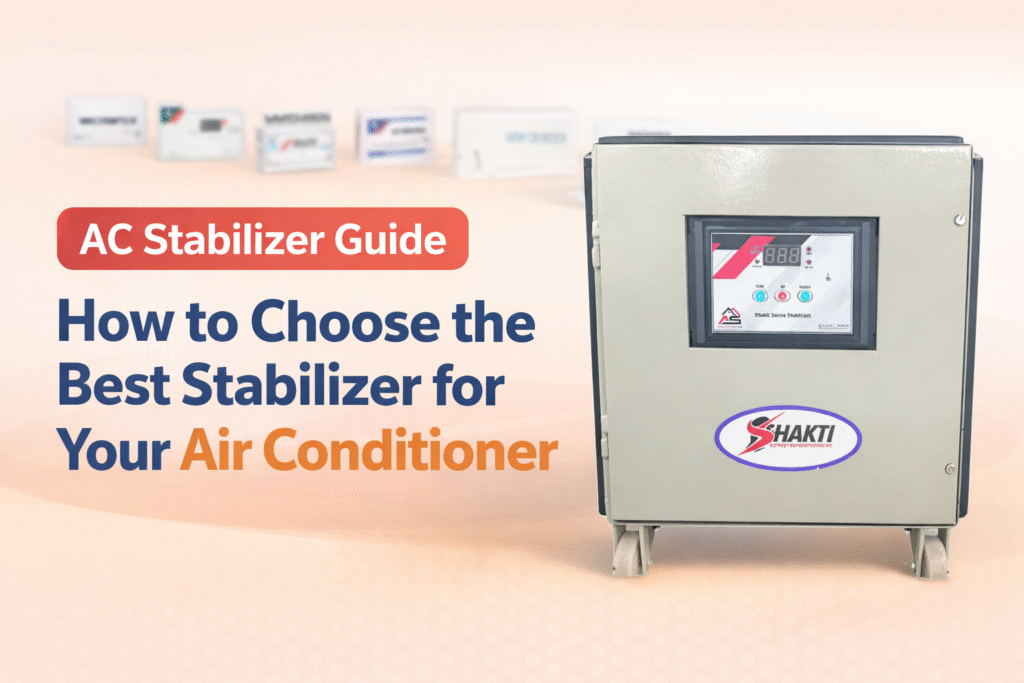
AC stabilizer
Air conditioners are essential for comfort, especially in regions where temperature levels are high. However, one major issue that affects AC performance and lifespan is voltage fluctuation. Sudden voltage spikes or drops can damage the compressor and internal components, leading to expensive repairs.
An AC stabilizer is designed to protect your air conditioner from such electrical issues. This guide will help you understand how to choose the right stabilizer and why it is an important investment.
What is an AC Stabilizer?
An AC stabilizer is an electrical device that regulates input voltage and delivers a stable output voltage to the air conditioner. It ensures that the AC operates within a safe voltage range, even when the incoming power supply is unstable.
Why Do You Need a Stabilizer for AC?
In many areas, voltage fluctuations are common due to load variations and inconsistent power supply. Using a stabilizer offers several benefits:
- Protects the compressor from voltage damage
- Enhances the lifespan of the air conditioner
- Reduces maintenance and repair costs
- Ensures consistent cooling performance
- Safeguards sensitive electronic components
Without a stabilizer, the risk of breakdown increases significantly.
Types of AC Stabilizers
Relay Type Stabilizer
This is a basic and cost-effective option suitable for areas with minor voltage fluctuations. It provides standard protection but may not be ideal for heavy-duty usage.
Servo Controlled Stabilizer
A servo stabilizer for AC offers precise voltage regulation and is suitable for both residential and commercial applications. It performs well in areas with frequent and severe voltage fluctuations.
Shakti Servo Stabilizer is a reliable option in this category, offering consistent performance and durability.
How to Choose the Right AC Stabilizer
1. Check AC Capacity
The stabilizer capacity should match your air conditioner’s tonnage:
- 1 Ton AC: 4 kVA stabilizer
- 1.5 Ton AC: 5 kVA stabilizer
- 2 Ton AC: 6 kVA stabilizer
Choosing a slightly higher capacity is recommended for better safety and performance.
2. Input Voltage Range
Select a stabilizer based on the voltage conditions in your area:
- Normal conditions: 170V to 270V
- High fluctuation areas: 130V to 300V
A wider voltage range ensures better protection.
3. Type of Stabilizer
For basic home use, a relay stabilizer may be sufficient. However, for long-term reliability and better performance, a servo stabilizer is a more suitable choice.
4. Protection Features
Look for essential safety features such as:
- Overload protection
- Thermal protection
- Time delay system
- High and low voltage cut-off
- Digital display (optional but useful)
These features enhance the safety and efficiency of the stabilizer.
Why Choose Shakti Servo Stabilizer for AC
Shakti Servo Stabilizer is designed to handle varying voltage conditions and provide stable output for air conditioners. It is suitable for both residential and commercial use.
Key advantages include:
- Accurate voltage correction
- Wide input voltage range
- Durable construction with high-quality components
- Energy-efficient performance
- Long operational life
This makes it a practical choice for users looking for long-term reliability.
Common Mistakes to Avoid
- Selecting a stabilizer with insufficient capacity
- Ignoring the input voltage range
- Choosing low-quality or unverified products
- Skipping professional installation
Avoiding these mistakes can prevent unnecessary damage and expenses.
Maintenance Tips for AC Stabilizer
- Ensure proper earthing
- Keep the stabilizer in a clean and dry environment
- Inspect wiring periodically
- Avoid overloading the system
Regular maintenance helps improve performance and extends the life of the stabilizer.
Frequently Asked Questions
Is a stabilizer required for inverter AC?
Inverter ACs have some inbuilt protection, but in areas with heavy voltage fluctuations, a stabilizer is still recommended.
Which stabilizer is best for AC?
A servo stabilizer is generally considered the best option due to its precision and reliability.
Does a stabilizer increase electricity consumption?
No, stabilizers consume minimal power and do not significantly impact electricity bills.
What is the average lifespan of an AC stabilizer?
A high-quality stabilizer can last between 5 to 10 years with proper maintenance.
Conclusion
An AC stabilizer is a critical component for protecting your air conditioner from voltage fluctuations. Choosing the right stabilizer depends on capacity, voltage range, and overall build quality.
For users seeking durability and consistent performance, Shakti Servo Stabilizer offers a dependable solution. Investing in a high-quality stabilizer not only protects your AC but also ensures efficient operation and long-term savings.
Read more – How to Pick the Right AC Stabilizer: A Practical Guide for Safe Cooling