MDF Name Badge: A Creative and Professional Identity Solution
Achievement Badge Maker
A name badge is a simple yet effective tool for displaying a person’s name, designation, company identity, or event role. While badges are available in several materials, an MDF Name Badge stands out because of its lightweight construction, attractive appearance, customisation possibilities, and cost-effective pricing. It can be designed for offices, schools, exhibitions, retail stores, events, hotels, restaurants, conferences, and promotional activities.
MDF, or Medium-Density Fibreboard, provides a smooth surface that can be printed, engraved, painted, or decorated in different styles. Businesses can use MDF badges to create a warm, natural, and creative presentation that is different from traditional plastic or metal options.
Why Choose an MDF Name Badge?
An MDF badge offers a combination of functionality and visual appeal. Its smooth surface allows manufacturers to add clear names, job titles, logos, patterns, and brand colours. The finished badge can be simple and professional or colourful and decorative, depending on its intended purpose.
The material is also lightweight, making it comfortable to wear during office hours, exhibitions, conferences, and long events. With proper finishing and careful handling, an MDF Name Badge can maintain its shape and appearance through repeated use.
Another advantage is affordability. MDF badges can be produced in bulk for teams, institutions, retail staff, and event participants without significantly increasing the overall branding budget.
Customisation Options Available
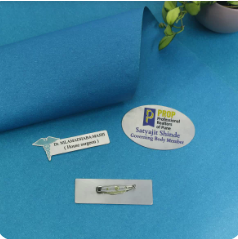
Customisation is one of the main reasons businesses select MDF badges. They can be created in rectangular, square, circular, oval, or fully customised shapes. Creative designs may reflect a company logo, product, symbol, or event theme.
Names and design elements can be added using digital printing, UV printing, laser engraving, vinyl application, or hand-painted detailing. A printed badge allows the use of detailed colours and graphics, while laser engraving creates a clean and natural appearance.
Different surface finishes may also be applied to improve presentation and protection. A glossy finish can make colours appear brighter, while a matte finish provides a subtle and sophisticated look.
Magnets, safety pins, clips, or combination fittings can be attached to the back of the badge. Magnetic fittings are useful when users want to avoid making holes in uniforms or formal clothing.
Applications in Different Industries
An MDF Name Badge can be used in many professional and social environments. Corporate organisations can provide personalised badges to employees for meetings, office visits, training programmes, and networking events.
Retail stores, cafés, hotels, and restaurants can use them to help customers identify staff members. Adding the employee’s name and role can create a friendlier and more approachable customer experience.
Schools and educational institutions may use MDF badges for teachers, coordinators, student leaders, competitions, annual functions, and club activities.
Event organisers can design badges for attendees, volunteers, speakers, exhibitors, and support staff. The badge colour or shape may be changed to represent different groups or access levels.
Creative businesses, handmade brands, eco-themed events, and art exhibitions may particularly appreciate the natural appearance of MDF.
Designing an Effective Name Badge
A good name badge should be visually attractive and easy to read. The employee or participant’s name should be the most noticeable element. Job titles and company information can be displayed in a smaller but readable font.
The badge should not contain too much information because excessive text can make the design look crowded. A logo, name, designation, and one supporting design element are generally sufficient.
Colour contrast is also important. Dark text should be used on a light background, while light text can work well on darker surfaces. The selected font should be clean and readable from a reasonable distance.
The badge size should remain comfortable and appropriate for the uniform or clothing on which it will be worn.
Care and Maintenance
MDF is a wood-based material and should be protected from excessive water and moisture. The badge should be cleaned gently with a dry or slightly damp soft cloth.
Harsh chemicals, rough brushes, and prolonged exposure to rain should be avoided. When not in use, badges should be stored in a dry box or pouch to prevent scratches and damage.
A protective coating can improve resistance to minor stains and regular handling. However, MDF badges should still be treated with reasonable care.
Frequently Asked Questions
1. What is an MDF name badge?
It is a personalised identification badge made from medium-density fibreboard. It can display a name, designation, logo, message, or event role.
2. Can MDF badges be customised?
Yes, they can be customised in different sizes, shapes, colours, finishes, fonts, and attachment styles.
3. Are MDF name badges lightweight?
Yes, MDF badges are generally lightweight and comfortable to wear for office hours, exhibitions, meetings, and events.
4. Can a company logo be printed on the badge?
Yes, company logos, brand colours, employee names, and job titles can be printed or engraved on the badge.
5. Which attachment option is available?
Common options include magnets, safety pins, clips, and combined pin-and-clip fittings.
6. Are MDF badges waterproof?
MDF is not naturally waterproof. A protective finish may provide limited moisture resistance, but direct water exposure should be avoided.
7. Can MDF badges be ordered in bulk?
Yes, customised MDF badges can be produced in bulk for corporate teams, schools, events, hotels, and retail businesses.
Conclusion
An MDF Name Badge provides a creative, lightweight, and economical solution for professional identification. Its smooth surface, flexible design options, and natural appearance make it suitable for businesses, schools, hospitality venues, exhibitions, and corporate events.
By selecting a readable design, suitable fitting, protective finish, and customised shape, organisations can create name badges that improve recognition while supporting a consistent and professional identity.