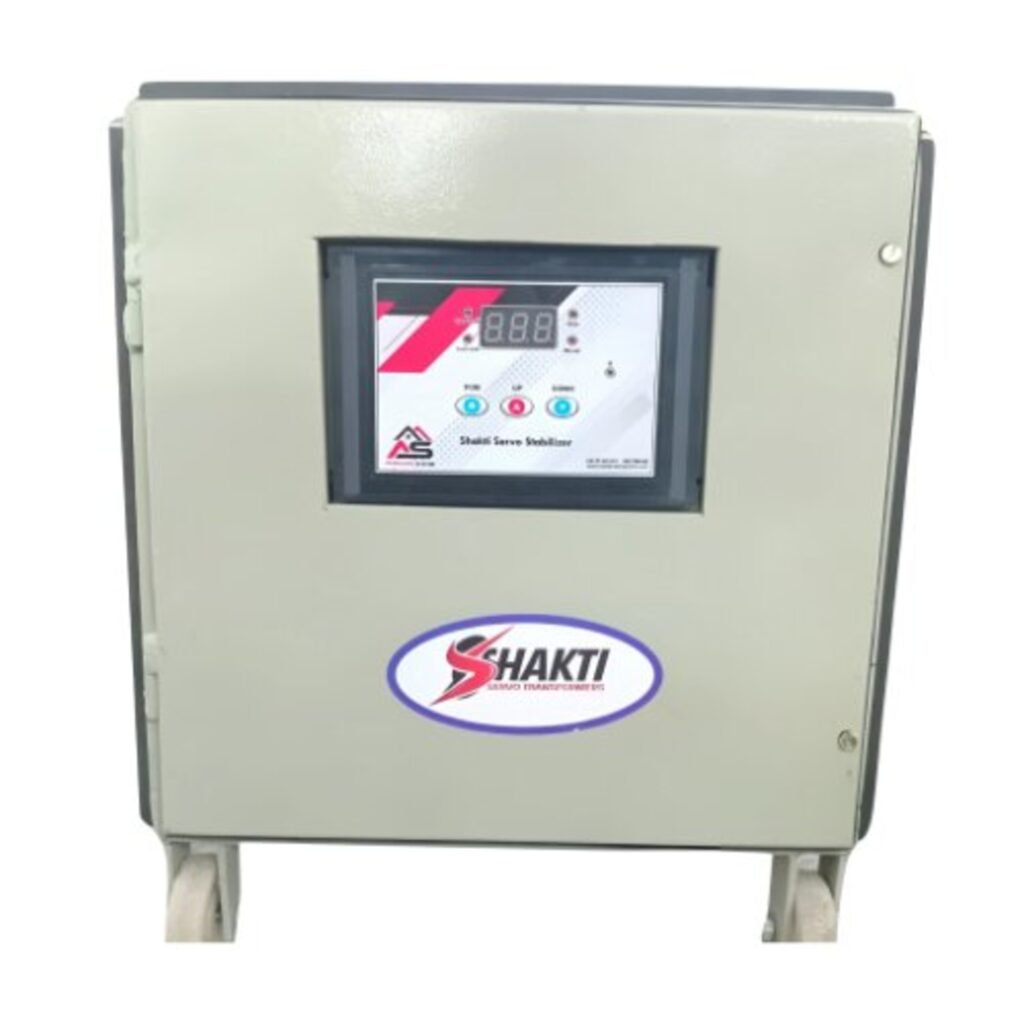
Servo Stabilizer Manufacturer in India
CNC (Computer Numerical Control) machines are the backbone of modern manufacturing, delivering unmatched precision and repeatability. However, these machines are highly sensitive to voltage fluctuations. Even a slight variation in power supply can lead to programming errors, tool damage, poor surface finish, or complete machine shutdown. That’s where a servo stabilizer becomes essential. Choosing the best servo stabilizer for CNC machines is not just about protection—it’s about ensuring consistent productivity and long-term cost savings.
Why CNC Machines Need a Servo Stabilizer
CNC machines rely on advanced electronic controllers, drives, and motors that demand stable voltage. In industrial areas, power supply is often unstable due to heavy load variations, leading to frequent voltage drops or surges. Without proper regulation, this can affect machine accuracy and performance.
A servo stabilizer works by continuously monitoring the input voltage and automatically correcting it to maintain a stable output. It uses a servo motor-driven mechanism to adjust voltage levels precisely. This ensures that the CNC machine receives a constant power supply, regardless of fluctuations.
Key Benefits of Using a Servo Stabilizer
One of the biggest advantages of installing a servo stabilizer is improved machine accuracy. Stable voltage allows CNC machines to operate with precision, reducing errors in cutting and shaping. This directly impacts product quality.
Another major benefit is equipment protection. CNC machines are expensive investments, and voltage instability can damage sensitive components like PLCs, drives, and control panels. A stabilizer prevents such damage, extending the lifespan of the equipment.
Servo stabilizers also help reduce downtime. Unexpected shutdowns due to voltage issues can disrupt production schedules and lead to financial losses. With a stabilizer in place, operations run smoothly without interruptions.
Energy efficiency is another important factor. Modern servo stabilizers are designed to optimize power usage, which can help reduce electricity costs over time.
Types of Servo Stabilizers for CNC Machines
Servo stabilizers are generally available in two main types—air-cooled and oil-cooled.
Air-cooled stabilizers are suitable for small to medium CNC machines. They are compact, easy to install, and require less maintenance. These are ideal for workshops and light industrial applications.
Oil-cooled stabilizers, on the other hand, are designed for heavy-duty operations. They offer better heat dissipation and are suitable for continuous usage in large manufacturing units. If your CNC machine operates for long hours or handles heavy loads, an oil-cooled stabilizer is the better choice.
How to Choose the Right Servo Stabilizer
Selecting the right stabilizer depends on several factors. The first and most important is the KVA rating. You should always choose a stabilizer with a capacity 1.5 to 2 times higher than your CNC machine’s load requirement. This ensures smooth handling of startup loads and prevents overload.
Next is the input voltage range. Industrial environments often experience wide voltage fluctuations, so it’s important to select a stabilizer that can handle a broad input range, such as 300V to 470V for three-phase systems.
Accuracy is another critical factor. For CNC machines, a stabilizer with ±1% voltage accuracy is highly recommended. This level of precision ensures optimal machine performance.
Build quality also matters. Always opt for stabilizers with copper windings, as they offer better conductivity, durability, and efficiency compared to aluminum.
Protection features should not be overlooked. A good servo stabilizer should include overload protection, short circuit protection, phase failure protection, and time delay systems for added safety.
Ideal Capacity for CNC Machines
The required stabilizer capacity depends on the size and type of CNC machine. For small CNC machines used in workshops, a 10 KVA three-phase stabilizer is usually sufficient. Medium-sized machines may require 15 KVA to 20 KVA stabilizers. Large industrial CNC machines often need 30 KVA or higher capacity stabilizers, especially if multiple machines are connected.
It’s always advisable to consult with a professional or supplier to calculate the exact load requirement before making a purchase.
Applications in Industry
Servo stabilizers for CNC machines are widely used across various industries. In automotive manufacturing, they ensure precision in component machining. In tool rooms and fabrication units, they help maintain consistency in production. They are also essential in aerospace, electronics, and metalworking industries where accuracy is critical.
Even small-scale industries and job workshops benefit greatly from installing servo stabilizers, as they help maintain quality standards and reduce operational risks.
Common Mistakes to Avoid
Many buyers make the mistake of choosing a stabilizer based only on price. A low-cost stabilizer may not provide the required accuracy or durability, leading to higher maintenance costs in the long run.
Another common error is selecting the wrong capacity. An undersized stabilizer can overload and fail, while an oversized one may result in unnecessary expense.
Ignoring after-sales support is also risky. Always choose a reliable manufacturer that offers proper service and warranty support.
Frequently Asked Questions (FAQs)
Q1. Which type of stabilizer is best for CNC machines?
A three-phase servo stabilizer with ±1% accuracy is the best choice for CNC machines, as it ensures precise voltage control and stable performance.
Q2. What KVA stabilizer is required for a CNC machine?
It depends on the machine load, but generally, a stabilizer with 1.5 to 2 times the CNC machine’s capacity is recommended for safe operation.
Q3. Is an oil-cooled stabilizer better than an air-cooled one?
Oil-cooled stabilizers are better for heavy-duty and continuous operations, while air-cooled models are suitable for smaller setups and shorter working hours.
Q4. Can voltage fluctuations damage CNC machines?
Yes, fluctuations can harm sensitive electronic components, affect accuracy, and even cause machine failure if not controlled.
Q5. How much voltage accuracy is required for CNC machines?
A stabilizer with ±1% voltage accuracy is ideal to maintain precision and protect the machine.
Q6. Do CNC machines need a stabilizer if UPS is already installed?
Yes, a UPS provides backup power, while a stabilizer regulates voltage. Both serve different purposes and are often used together.
Conclusion
Investing in the best servo stabilizer for CNC machines is a smart decision that ensures stable performance, protects expensive equipment, and improves overall productivity. With the right stabilizer, you can eliminate the risks associated with voltage fluctuations and focus on achieving precision and efficiency in your operations.
Whether you run a small workshop or a large manufacturing unit, choosing the correct stabilizer with the right capacity, accuracy, and features will make a significant difference. In the long run, it’s not just a power solution—it’s a productivity booster and a safeguard for your business.