How Metal and Polyester Buttons Are Made: A Buyer’s Guide to Quality, Process and Sourcing
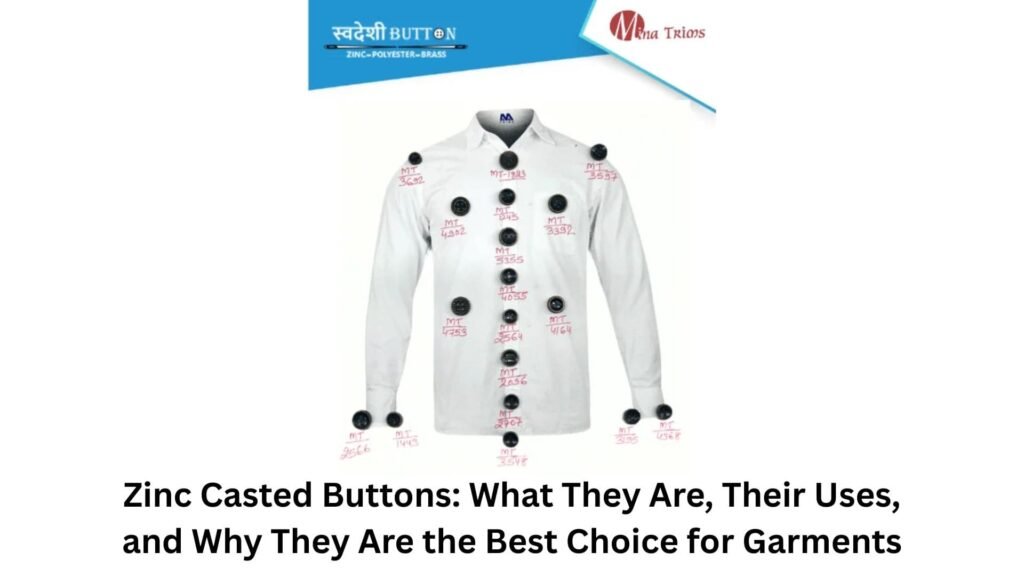
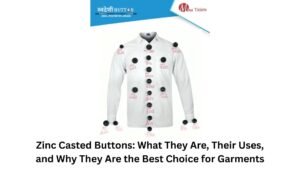
Metal and polyester buttons, the two most used trims in garment manufacturing.
A button looks like a small detail, yet it decides whether a jacket closes cleanly, whether a shirt survives hundreds of washes, and whether a customer feels a garment is well made. For brands, exporters and garment units, choosing the right button supplier is as important as choosing fabric.
This guide explains how the two most widely used trim categories are produced: metal buttons and polyester buttons. It covers what to inspect before placing a bulk order and how to evaluate a manufacturer.
Why Button Manufacturing Matters More Than Most Buyers Think
Most button problems seen after production, such as discolouration, cracked faces, rust spots, shank breakage, and shade mismatch between lots, begin at the manufacturing stage. Buyers who understand the process can ask sharper questions, compare quotations fairly and avoid costly rejections.
The two categories behave very differently:
- Metal buttons are valued for weight, finish, durability and a premium feel.
- Polyester buttons are valued for colour range, light weight, wash resistance and cost efficiency in high volumes.
Many garment lines use both, for example metal buttons on jackets and polyester buttons on shirts and blouses.
Understanding the Metal Button
A metal button is far more common in everyday clothing than most people realise. It appears on denim, blazers, overcoats, uniforms, workwear, kidswear and fashion jackets. Common forms include shank buttons, snap buttons, jeans buttons and decorative fashion buttons.
What makes a metal button attractive to brands:
- Strong, premium feel: the weight signals quality in outerwear and denim.
- Design flexibility: logos, embossing, engraving and textured faces can be reproduced precisely.
- Finish variety: antique, nickel, gold, gunmetal, matte and polished looks are all possible.
- Durability: a well-made metal button handles repeated fastening, pressing and washing.
How Metal Buttons Are Made: The Casting Process
Understanding metal button manufacturing helps you judge whether a supplier is capable of consistent bulk output. While details differ by factory, the broad process looks like this.
1. Design and mould creation
Every button begins with a design: size (measured in ligne), face pattern, logo and back style. A mould is then created for that design. The accuracy of the mould directly affects how sharp the final detail is, which is why complex logo buttons need experienced toolmakers.
2. Alloy preparation and casting
In casting, molten alloy is poured or injected into the mould and allowed to solidify. Zinc alloy is popular for this process because it flows well into fine detail and gives consistent results across large quantities. Temperature control matters here. Poor control causes pores, rough surfaces and weak shanks.
3. Trimming and finishing
After casting, excess material is removed and the button is tumbled and polished. This step produces the smooth edges that prevent fabric snagging.
4. Plating and colour finishing
Surface treatment gives the button its final look and its resistance to corrosion. Plating quality is one of the biggest differentiators between suppliers. Thin or uneven plating is the usual reason a button tarnishes early.
5. Lacquer coating and inspection
A protective coat helps the finish resist sweat, moisture and abrasion. Finished lots are then inspected for size, shade, finish defects and shank strength.
If you want a deeper look at available finishes and styles, you can explore the full range of metal button manufacturing capabilities before shortlisting a supplier.
Understanding Polyester Buttons
Polyester buttons are the workhorse of shirts, blouses, kurtas, school uniforms, suiting and everyday ready-to-wear. They are produced from polyester resin and can imitate the look of natural materials such as horn, shell and wood, while offering more consistency and better colour control.
Key advantages:
- Wide colour matching: shades can be matched to fabric swatches, which is crucial for brands with seasonal palettes.
- Excellent wash performance: quality polyester resists fading, moisture and detergent exposure.
- Lightweight: ideal for delicate fabrics where heavy buttons would distort the fall.
- Cost efficiency: suitable for large production runs without sacrificing appearance.
How Polyester Buttons Are Made
Reliable polyester button manufacturing is a controlled, multi-stage process:
1. Resin preparation and casting
Polyester resin is mixed with pigments and hardeners, then cast into rods, sheets or slabs. Mixing accuracy determines colour consistency, so even a small variation can cause shade differences between batches.
2. Curing
The cast material is cured so it reaches the right hardness. Under-cured material may crack or warp, while over-cured material may turn brittle.
3. Cutting and blanking
Rods or sheets are cut into button blanks of the required thickness and diameter.
4. Turning, drilling and shaping
Blanks are turned and shaped, then holes are drilled (two-hole, four-hole) or shanks are formed. Hole alignment and edge quality affect how the thread sits and how long the button lasts.
5. Polishing and tumbling
Buttons are tumbled with polishing media to bring out the surface finish, from high-gloss to matte.
6. Dyeing, finishing and final inspection
Final colour, patterns and effects are applied, followed by inspection for size tolerance, hole quality, shade and surface defects.
Brands comparing options in this category can review the range offered by experienced polyester button manufacturing units to understand which finishes and sizes are available.
Quality Checks Every Buyer Should Insist On
For metal buttons
- Plating adhesion and finish consistency across the lot
- Shank or prong strength (pull test)
- Corrosion resistance and tarnish behaviour
- Weight and size uniformity
- Sharpness of embossing or logo detail
- Safe use on garments, including nickel-release requirements for markets that regulate it
For polyester buttons
- Colourfastness to washing, dry cleaning and light
- Hardness and crack resistance under pressure
- Hole finish without sharp edges that cut thread
- Heat resistance during ironing and pressing
- Shade matching against your approved swatch, and lot-to-lot consistency
Ask every supplier for a pre-production sample and a written specification before you approve bulk production.
How to Choose Between Metal and Polyester Buttons
| Factor | Metal Button | Polyester Button |
|---|---|---|
| Best for | Denim, jackets, coats, uniforms | Shirts, blouses, suits, kidswear |
| Look and feel | Premium, weighty | Light, versatile |
| Colour options | Plating and finish based | Almost unlimited shade matching |
| Design detail | Logos, embossing, engraving | Patterns, imitation natural looks |
| Cost at high volume | Moderate to higher | Generally economical |
| Wash performance | Depends on plating quality | Typically excellent |
A practical rule: choose by garment function first, then by brand positioning, then by budget.
What to Look for in a Button Manufacturer
Whether you are buying metal or polyester, evaluate the supplier on more than price.
- In-house production capability: manufacturers control quality more tightly than traders.
- Mould and tooling support: essential for custom designs.
- Sampling speed: quick, accurate samples reflect a well-run unit.
- Minimum order flexibility: important for new and growing brands.
- Documented quality checks: ask what is tested and how often.
- Consistent lead times: reliable delivery protects your production schedule.
- Export readiness: proper packing, labelling and documentation.
If you are sourcing polyester trims in volume, shortlisting reputable polyester button manufacturers who can show process control and consistent colour matching will save you rework later.
Common Mistakes Buyers Make
- Approving a sample but not the bulk lot standard: always keep a sealed reference piece.
- Choosing purely on unit price: cheap buttons that fail in wash tests cost far more in returns.
- Ignoring packing and counting accuracy: short counts disrupt production lines.
- Not testing on the actual fabric: a button that sits well on one fabric may pull on another.
- Skipping wash and pressing trials: test before committing to a full order.
Frequently Asked Questions
What is the difference between metal button manufacturing and polyester button manufacturing?
Metal buttons are produced by casting alloy into moulds, then finishing and plating them. Polyester buttons are made from cast and cured resin that is cut, shaped, drilled and polished.
Which button is better for denim and jackets?
A metal button is usually preferred for its strength and premium look. Polyester works well for shirts and lighter garments.
Can polyester buttons match my fabric colour exactly?
Yes. Good manufacturers match shades to a supplied swatch, though you should approve a sample first.
Are metal buttons safe for garments?
Quality metal buttons with proper plating and coating are widely used. For regulated export markets, confirm any chemical or nickel-release compliance requirements with your supplier.
How do I verify a manufacturer’s quality?
Request samples, ask about their testing process, run your own wash and pressing trials, and start with a trial order.
Do I need to order in very large quantities?
Minimums vary by supplier and by design. Standard designs are easier to order in smaller lots, while custom moulds usually need higher quantities.
Final Thoughts
Great garments depend on small components made well. A durable metal button elevates outerwear and denim, while well-finished polyester buttons deliver colour accuracy and wash performance for everyday apparel. Brands that understand the manufacturing process, ask for proper quality checks and partner with capable manufacturers end up with fewer rejections and more consistent garments.
Explore the metal button manufacturing range for casted, plated and custom designs, and browse the polyester button manufacturing collection for shirt, blouse and suiting buttons. For bulk sourcing, connect with experienced polyester button manufacturers to get samples and quotations for your next production run.