Power Stability That Pays Off: Why 10 kVA Servo Stabilizers Fit CNCs, Printers and ACs
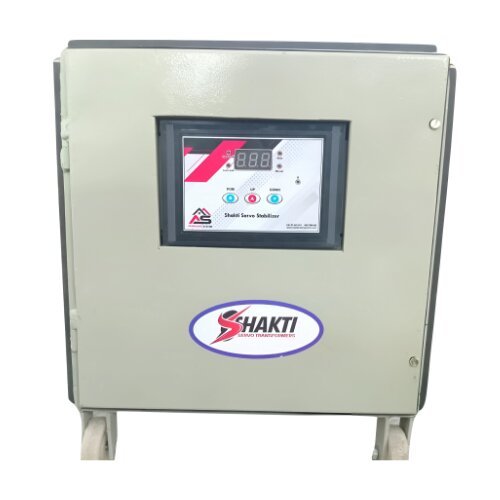
10 kVA servo stabilizer
Ask Your MENTOR! AnyTime AnyWhere
10 kVA servo stabilizer
In many workshops, studios and commercial spaces, machines often fail not because of poor quality but due to unstable power supply. Voltage fluctuations, sudden spikes and drops can reduce performance, affect output quality and even damage expensive equipment. This is where a 10 kVA servo stabilizer becomes a practical and reliable solution.
Let’s understand why this capacity is considered ideal for CNC machines, printers and air conditioners.
A 10 kVA stabilizer can handle approximately 7 to 8 kW load. This makes it suitable for:
It offers the right balance between capacity and cost, making it neither oversized nor insufficient.
CNC machines rely heavily on electronic components such as controllers, drives and motors. Even minor voltage variations can lead to:
A 10 kVA servo stabilizer ensures continuous voltage correction, resulting in:
Stable power directly contributes to precision and productivity.
Modern printers, especially those used in commercial printing, require a steady voltage supply. Fluctuations can cause:
Using a 10 kVA stabilizer helps in:
This is essential for businesses where output quality is critical.
Air conditioners operate under varying load conditions. Voltage instability can:
A 10 kVA stabilizer provides:
This ensures consistent cooling and lower maintenance costs.
A smaller stabilizer, such as 5 kVA, may not handle the load effectively and can lead to overloading. On the other hand, a larger stabilizer like 15 kVA may increase costs unnecessarily if the load does not require it. A 10 kVA unit provides an optimal balance for medium-scale usage.
Q1. Can a 10 kVA stabilizer run multiple devices together?
Yes, as long as the total connected load stays within its capacity.
Q2. Is a servo stabilizer better than a regular stabilizer?
Servo stabilizers provide more accurate voltage correction, making them suitable for sensitive equipment.
Q3. How to choose between single phase and three phase?
It depends on the equipment. CNC machines usually require three phase, while printers and ACs may run on single phase.
Q4. Does it help in saving electricity?
It improves efficiency and prevents damage, which indirectly reduces overall costs.
A 10 kVA servo stabilizer plays a crucial role in maintaining stable power supply for CNC machines, printers and air conditioners. It ensures better performance, protects equipment from voltage issues and reduces long-term operational costs. For businesses and setups dealing with sensitive or high-value equipment, it is a practical and cost-effective investment.