Corporate Events: Building Business Impact Through Professional Planning
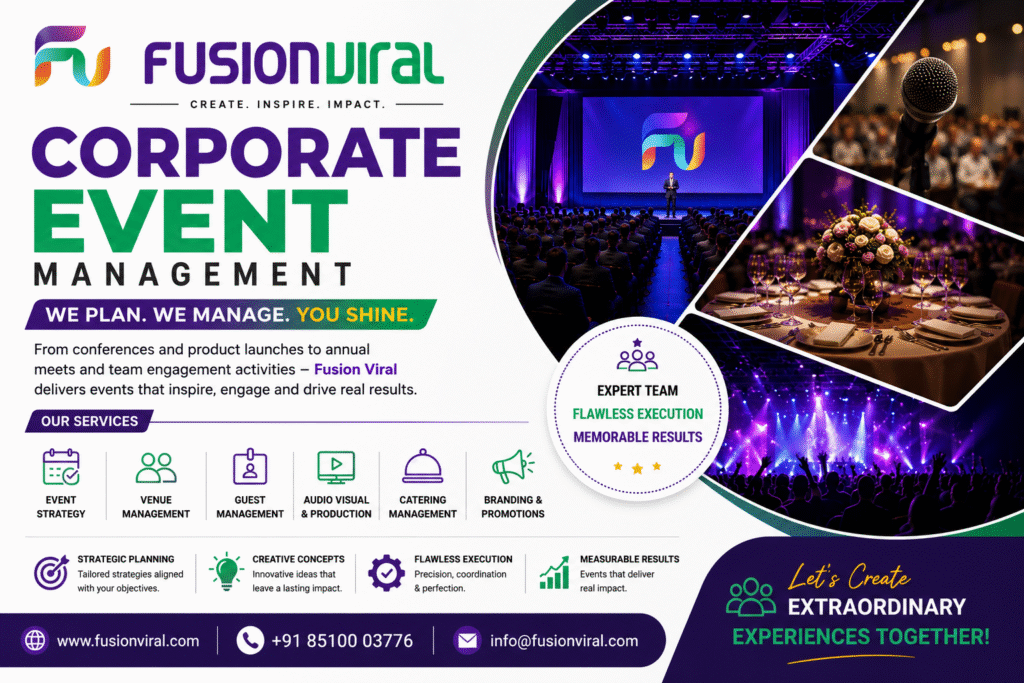
Corporate events
Corporate events are one of the most effective ways for businesses to connect, communicate, and create a strong professional image. These events are organized for employees, clients, business partners, investors, dealers, and industry professionals. A corporate event can be a conference, seminar, product launch, annual celebration, award function, training session, exhibition, networking meet, or team-building activity.
In today’s competitive business environment, companies need more than regular meetings to build relationships. Corporate events provide a formal platform where businesses can share ideas, present achievements, launch new services, and strengthen their brand presence. A well-organized event leaves a lasting impression and helps a company stand out in front of its audience.
Meaning of Corporate Events
Corporate events are professional gatherings planned by businesses or organizations for a specific purpose. The purpose may be promotion, communication, training, celebration, networking, or employee engagement. These events are different from casual functions because they require proper planning, branding, coordination, and execution.
Every corporate event reflects the company’s values and working style. From the invitation design to stage setup, guest welcome, presentation flow, and hospitality, each element should look professional and organized.
Why Corporate Events Are Important
Corporate events help companies build trust and improve business relationships. When clients, partners, and employees come together in a well-managed environment, it creates better communication and stronger connections.
For employees, corporate events improve motivation and teamwork. Award ceremonies, annual functions, and team-building activities help employees feel appreciated. For clients and partners, events create confidence in the company’s professionalism and future vision. For brands, corporate events provide an opportunity to showcase products, services, achievements, and business goals.
Popular Types of Corporate Events
There are many types of corporate events based on business needs. Conferences are organized to discuss industry trends, business updates, and expert knowledge. Seminars and workshops are useful for learning, training, and skill development.
Product launches are planned to introduce new products or services to the market. Annual functions and award nights are organized to celebrate company achievements and recognize employee performance. Networking events help professionals meet and build business opportunities. Team-building events improve coordination, communication, and workplace bonding.
Planning a Corporate Event
A successful corporate event starts with a clear objective. Before planning, the company should decide the goal of the event. It may be brand promotion, employee appreciation, client engagement, training, or business networking.
After finalizing the goal, the next steps include budgeting, venue selection, theme planning, guest list preparation, stage design, technical setup, branding, food arrangements, photography, videography, and event flow. Every detail should be planned according to the audience and purpose of the event.
Good planning helps avoid confusion and last-minute problems. It also ensures that guests have a smooth and professional experience from entry to exit.
Role of Professional Event Management
Professional event management is very important for corporate events. Event management teams handle planning, vendor coordination, decoration, stage setup, sound, lighting, seating, guest management, branding, and complete on-ground execution.
With professional support, companies can save time and focus on their business message. Event experts understand how to manage timelines, technical requirements, hospitality, and audience engagement. Their experience helps make the event smooth, organized, and impressive.
Benefits of Corporate Events
Corporate events offer many business benefits. They improve brand visibility, build strong relationships, and help companies communicate directly with their audience. Events also create memorable experiences that people associate with the brand.
For internal teams, corporate events increase employee engagement and loyalty. For external guests, they improve trust and brand recall. A good corporate event can also support marketing, public relations, lead generation, and business development.
Corporate Events and Branding
Branding plays a major role in corporate events. A company can use banners, LED screens, standees, brochures, digital presentations, stage backdrops, welcome boards, and corporate gifts to highlight its identity.
The event theme, colors, design, and communication should match the company’s brand image. When branding is done properly, the event looks more professional and creates a stronger impact on guests.
FAQs
What are corporate events?
Corporate events are professional events organized by companies for employees, clients, partners, investors, or business audiences.
What are examples of corporate events?
Common examples include conferences, seminars, workshops, product launches, award functions, annual meetings, exhibitions, and team-building events.
Why do companies organize corporate events?
Companies organize corporate events to build relationships, promote their brand, motivate employees, share information, and create networking opportunities.
What makes a corporate event successful?
Clear planning, proper coordination, professional branding, smooth guest management, good venue selection, and strong execution make a corporate event successful.
Is event management important for corporate events?
Yes, event management is important because it helps handle planning, vendors, technical setup, branding, hospitality, and complete event execution professionally.
Conclusion
Corporate events are powerful tools for business communication, branding, employee engagement, and relationship building. They help companies create professional experiences that leave a strong impression on guests. Whether it is a product launch, conference, seminar, annual function, or networking event, proper planning and execution are essential for success. A well-managed corporate event not only supports business goals but also strengthens the company’s image in the market.