Metal Button Manufacturing: A Practical Guide to Finishes, Plating and Quality
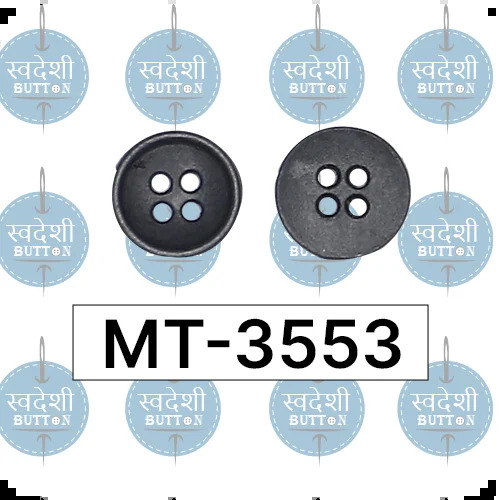
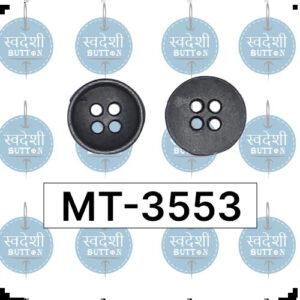
Metal button manufacturing produces buttons in a range of finishes, from antique brass to gunmetal.
A garment is often judged by its smallest details. A shirt may be cut perfectly, but a dull, chipped or rusting button can ruin the whole impression. That is why Metal Button Manufacturing matters so much to clothing brands, uniform makers and export houses. This guide explains how metal buttons get their look and durability, and what buyers should check before placing a bulk order.
What Is Metal Button Manufacturing?
Metal button manufacturing is the process of turning alloy into finished garment buttons through casting or stamping, followed by finishing, plating, polishing and quality checks. Each stage affects how the button looks, how long it lasts and how it behaves in the wash.
A Metal Button is chosen for its weight, its premium feel and its ability to carry detailed designs such as logos, embossed patterns and engraved text. This makes it popular on jeans, blazers, coats, uniforms and fashion wear.
Step 1: Choosing the Right Alloy
Everything starts with the base metal. Common choices include zinc alloy, brass and other metal blends. Zinc alloy is widely used because it flows well into moulds and captures fine detail, which makes it ideal for decorative and branded buttons.
A reliable manufacturer selects the alloy according to the garment type, the expected wear and the finish required, rather than using one material for everything.
Step 2: Casting or Stamping
There are two main ways to shape a metal button:
- Casting: Molten alloy is poured or injected into a mould. This suits detailed, three-dimensional and custom-logo designs.
- Stamping: Metal sheet is pressed into shape. This suits simpler, flatter designs.
After shaping, the button is trimmed, cleaned and prepared so that the surface is smooth before any finishing begins. Rough edges or casting marks left at this stage will show up later.
Step 3: Surface Preparation
Before plating, buttons are tumbled, polished and cleaned. This removes burrs, oil and residue. Good surface preparation is one of the biggest factors in how well plating sticks. Skipping or rushing it is a common cause of peeling and flaking.
Step 4: Plating and Finishing
This is where a metal button gets its colour and character. Popular finishes include:
| Finish | Look | Typical Use |
|---|---|---|
| Antique brass | Warm, aged gold tone | Blazers, coats, heritage styles |
| Nickel / silver | Bright, clean silver | Shirts, jackets, formal wear |
| Gold | Rich, polished gold | Fashion wear, uniforms |
| Gunmetal / black | Dark, modern | Denim, streetwear, outerwear |
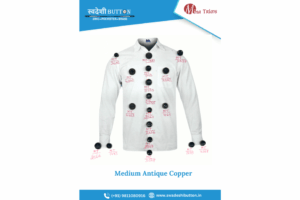
| Copper / bronze | Earthy warm tone | Casual and rustic styles |
Some finishes can be buffed to a mirror shine, while others are left matte or brushed. A protective coating may be added to slow tarnish and help the finish survive repeated washing.
Step 5: Quality Control
A professional metal button manufacturer checks every batch. Key checks include:
- Finish consistency: Colour should match across the whole batch, not just the sample.
- Edge smoothness: Sharp edges can cut thread and damage fabric.
- Attachment strength: The shank or tack must hold under pulling.
- Wash and wear resistance: The finish should not peel, fade or discolour quickly.
- Size accuracy: Every button should match the ordered size so that buttonholes fit evenly.
How to Choose a Metal Button Manufacturer
Before ordering in bulk, ask these questions:
- Can you supply a sample, and will bulk match it exactly?
- Which alloys and finishes do you offer?
- Can you make custom logo or embossed buttons?
- What are your minimum order quantity and lead time?
- How do you test finish durability?
A manufacturer who answers clearly, and who is happy to share samples, is usually one worth working with. You can explore the full range of options in the Metal Button collection on the Swadeshi Button website.
Common Mistakes Buyers Make
- Approving a sample but not checking the bulk batch against it.
- Choosing a finish for looks alone, without thinking about washing and wear.
- Ignoring button weight on lightweight fabrics.
- Ordering too late and leaving no time for sampling.
Final Thoughts
Great buttons come from good decisions at every stage: the alloy, the shaping method, the surface preparation, the plating and the testing. When these are done well, a metal button adds lasting value to a garment. If you are sourcing for your next collection, working with an experienced partner in Metal Button Manufacturing helps you get consistent quality, custom designs and dependable supply.