How to Choose a Servo Stabilizer for Industrial Voltage Protection in India
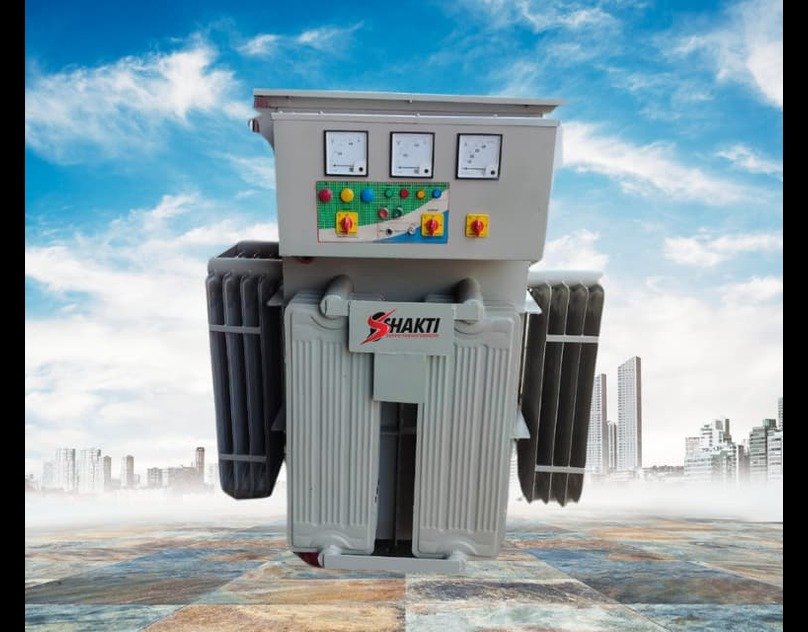
A servo stabilizer keeps output voltage steady even when the incoming supply fluctuates.
Voltage fluctuation is one of the most common and costly problems for Indian industries. A sudden dip or surge can stop a CNC machine mid-cycle, damage a PLC panel, or shorten the life of compressors and motors. This is why a dependable Servo Stabilizer has become a standard part of factory and commercial electrical setups.
Why Voltage Fluctuation Is a Serious Problem
Power supply in many industrial belts is rarely stable. Overloaded transformers, long distribution lines, and heavy neighbouring loads all cause the voltage to swing well beyond safe limits. Equipment is designed to run within a narrow voltage window, and operating outside it brings:
- Overheating of motors and windings
- Frequent breakdowns and unplanned downtime
- Reduced efficiency and higher power bills
- Damage to sensitive electronics and control systems
- Shorter machine life and higher maintenance costs
A stabilizer keeps the output voltage steady even when the incoming supply is not.
How a Servo Stabilizer Works
A servo stabilizer uses a servo motor, a buck-boost transformer and an electronic control circuit. The control card constantly monitors the output voltage. When it drifts from the set value, the servo motor moves a carbon brush along an autotransformer winding, adding or removing voltage until the output is corrected.
Because the correction is continuous rather than stepped, the output stays accurate, usually within ±1% of the set voltage. This is the main reason servo-controlled units are preferred over relay-type stabilizers for sensitive and heavy-duty loads.
Key Advantages
- High accuracy: Smooth, stepless correction protects precision machinery.
- Wide input range: Handles severe low and high voltage conditions.
- Load tolerance: Copes with sudden load changes and overloads better than many alternatives.
- Long service life: Robust construction suits continuous, round-the-clock operation.
- Low maintenance: Few moving parts and simple servicing.
Where Servo Stabilizers Are Used
- CNC, VMC and lathe machines
- Textile and packaging units
- Plastic injection moulding plants
- Pharmaceutical and food processing facilities
- Printing presses and offset machines
- Hospitals, laboratories and diagnostic centres
- Hotels, malls, offices and data rooms
- Elevators, pumps and HVAC systems
Choosing the Right Manufacturer
The quality of a stabilizer depends heavily on the company that builds it. Working directly with an experienced Servo Stabilizer Manufacturer gives you advantages a trader cannot match:
- Quality control over copper winding, servo motors and control cards
- Customization for your exact load, phase and voltage range
- Clear technical guidance on sizing
- Genuine warranty and dependable after-sales service
- Spare parts availability over the long term
Ask any manufacturer about their testing procedures, copper grade, cooling design and warranty terms before you order.
Why Location Matters: Servo Stabilizer in Delhi
Delhi NCR has one of the largest concentrations of industrial and commercial users in the country, from Okhla, Mayapuri and Naraina to Bawana, Narela and Wazirpur. Many of them deal with unstable supply during peak summer loads. A Servo Stabilizer in Delhi from a local source means faster delivery, quicker installation, prompt servicing and easier access to spares when something needs attention.
Other Terms You Will Hear
Buyers often search for the same product under different names. A Servo Voltage Stabilizer is simply the full name for the same technology: a stabilizer that uses a servo mechanism to regulate voltage. Likewise, an established Servo Stabilizer Manufacturer in India typically serves clients nationwide, offering both standard and custom-built units, while a reliable servo stabilizer Supplier helps with ready stock, quick dispatch and installation support. Whichever route you take, verify build quality and warranty before you commit.
How to Select the Right Capacity
- Calculate your total load in kVA, adding all connected machines.
- Add a safety margin of around 20-25% for starting currents and future expansion.
- Confirm the phase: single-phase for smaller loads, three-phase for industrial machinery.
- Check the input voltage range at your site, especially the lowest and highest readings.
- Choose the cooling type: air-cooled for most indoor installations, oil-cooled for harsher, high-load environments.
Installation and Maintenance Tips
- Install in a clean, ventilated area away from moisture and dust.
- Keep clearance around the unit for airflow.
- Ensure proper earthing and correctly rated cables and MCBs.
- Inspect carbon brushes and the roller track periodically.
- Clean dust from the unit and check connections every few months.
- Schedule routine servicing rather than waiting for a fault.
Conclusion
A properly sized, well-built stabilizer protects your machinery, cuts downtime and lowers long-term costs. Select a trusted manufacturer, match the capacity to your load, and maintain the unit regularly, and it will deliver reliable voltage protection for many years.